What is stevia?
A plant from Paraguay and the source of the sweetener steviol glycosides (E960a).
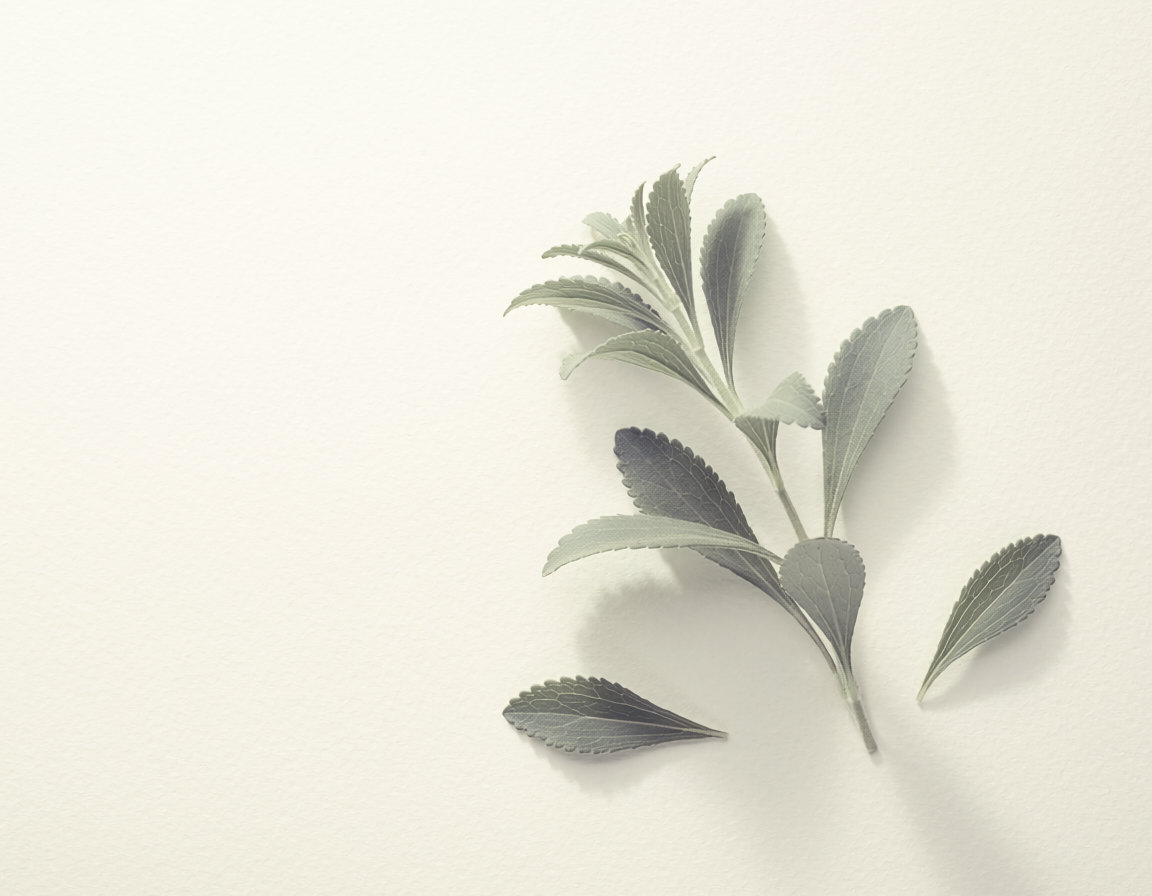
Stevia, also known as honey leaf, comes from the herb Stevia rebaudiana Bertoni and has its origins in Paraguay. The Guarani people have used the plant for centuries to sweeten food and herbal tea.
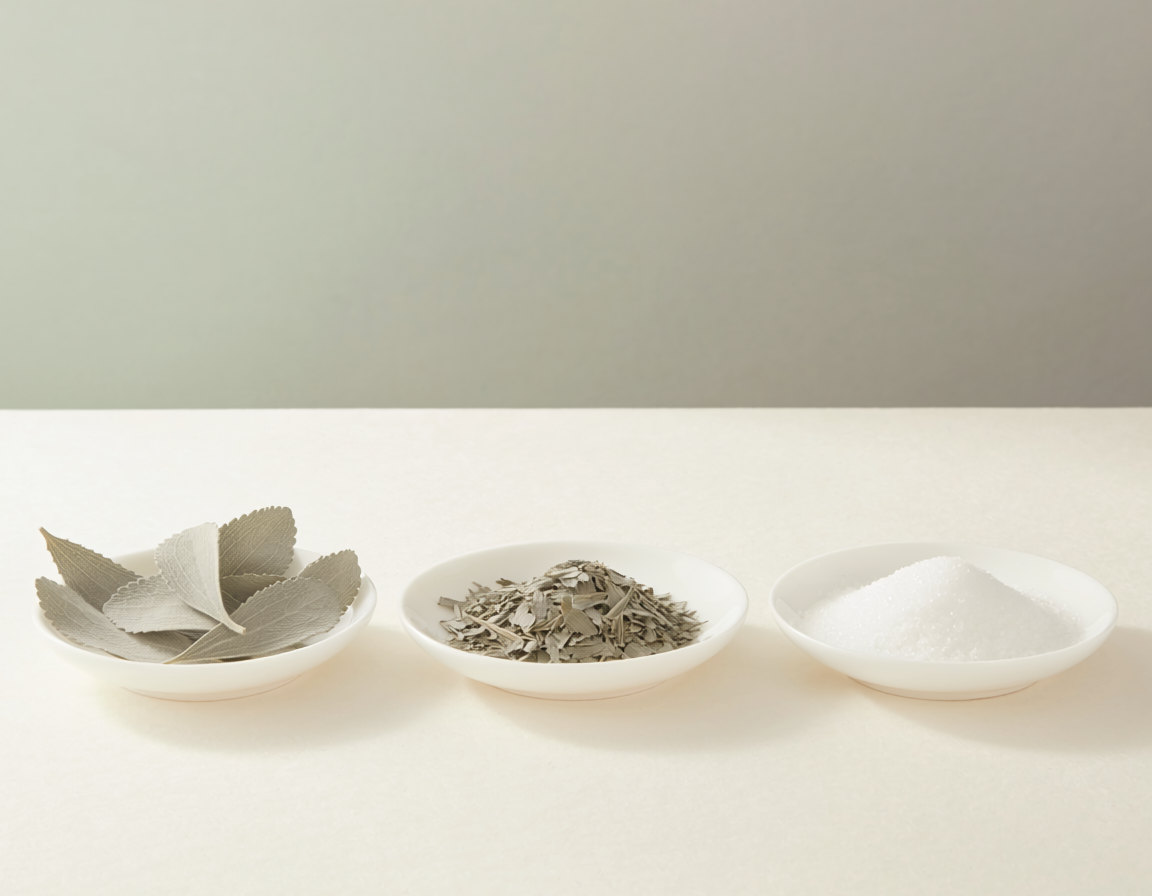
The sweet components of stevia, the steviol glycosides (including Reb-A), are obtained from the leaves through an extraction process. The result is a white powder: steviol glycosides (E960a). In diluted solution they are about 200 to 350 times sweeter than sugar; at higher doses this relative sweetening power decreases. The EU prescribes a purity of at least 95% steviol glycosides. Purity is indicated by a number after Reb-A: Reb-A98 contains more pure rebaudioside A than Reb-A60 and is therefore sweeter per gram, with less bitter aftertaste.
Because of its extreme sweetening power, the pure extract powder is hard to dose. That is why varieties have been developed in which the extract is supplemented with carrier ingredients such as inulin or erythritol. Inulin gives a fine structure comparable to icing sugar (SteviJa Zoetpoeder), erythritol gives a crystal form with the structure of sugar (SteviJa Kristal). Both combinations make stevia easy to dose.
Steviol glycosides remain stable when heated and are therefore suitable for cooking and baking.
Is stevia bitter?
No, stevia as a sweetener does not have to be bitter. In some products it can give a bitter aftertaste, especially with low quality and/or large quantities. The purity of the extract and the way it is processed determine the bitterness. With high purity less is needed for a pleasant sweetness, so there is less aftertaste.
What about SteviJa?
SteviJa uses steviol glycosides of high purity. We develop our own recipe with a mix of all the substances that make up steviol glycosides. The other ingredients are listed on each product label.
Percentage of steviol glycosides on the packaging
Stevia leaves contain several sweet substances (Dul-A, Reb-A to Reb-F, Rub, steviolbioside, stevioside, steviol). Together they are called steviol glycosides. Within the EU a minimum purity of 95% for this mix is laid down by law; the remaining 5% consists of moisture, polyphenols and flavonoids.
Labels may only state “steviol glycosides” or “E960a” (until 2021 this designation was E960). Some manufacturers add “>95%”. Many consumers then think that 95% of the product consists of stevia. That is not the case: the percentage only says something about the purity of the extract, not about its share in the end product.
Of the steviol glycosides, Reb-A is the most widely used and sweetest substance. A higher Reb-A purity means a purer product, a higher sweetening power per gram and a better taste. Those who use a low purity need more and deliver a lower quality.
Reb-A overview
| Purity | Steviol glycosides | Sweetening power | Taste (1-10) |
|---|---|---|---|
| Reb-A 40% | insufficient | 200-300 | 5,5 |
| Reb-A 60% | >95% | 250-300 | 6,5 |
| Reb-A 70% | >95% | 250-300 | 7 |
| Reb-A 80% | 95% | 300-350 | 7,5 |
| Reb-A 90% | 95% | 300-350 | 8,5 |
| Reb-A 95% | 95% | 300-350 | 9 |
| Reb-A 97% | 95% | 400-450 | 9,5 |
| Reb-A 98% | 95% | 400-450 | 10 |
The sweetening power in this table applies per gram of powder: the purer the Reb-A, the more sweet substance there is in one gram. The sweetening power of the substance itself does not change. The figures apply to diluted solutions; at higher doses the relative sweetening power decreases.
Remember: more steviol glycosides in a product automatically means a lower quality and taste. That is why SteviJa deliberately does not state the percentage on the packaging; we do not want consumers to be misled by it. For competitive reasons we also do not disclose our specific recipe.
Carrier ingredients
In diluted solution our steviol glycosides are about 200 to 350 times sweeter than sugar. A teaspoon in your coffee would equal hundreds of spoonfuls of sugar. To make the sweetening power comparable to sugar we use carrier ingredients. SteviJa uses carrier ingredients such as inulin (from chicory) and erythritol (from plant sugars).
Here too there are big differences between producers. Maltodextrin, for example, dissolved in water is effectively glucose syrup, in other words sugar. SteviJa does not use maltodextrin.
Why a sweetening power of, for example, 4-12?
With sugar, sweetening power increases in a straight line: ten lumps are ten times as sweet as one. With stevia it is a curve: one dose is comparable to one lump, but ten doses can be as much as 40 times sweeter than sugar. That is why SteviJa Zoetpoeder states 4:12 and SteviJa Kristal 1:1 to 1:3. In small quantities (coffee, tea) the sweetening power equals sugar; at larger doses (baking) one part Kristal equals three parts sugar.
If you use more stevia than necessary, the plant's characteristic liquorice-like taste comes through. So for stevia: less = more, and it is more economical too!
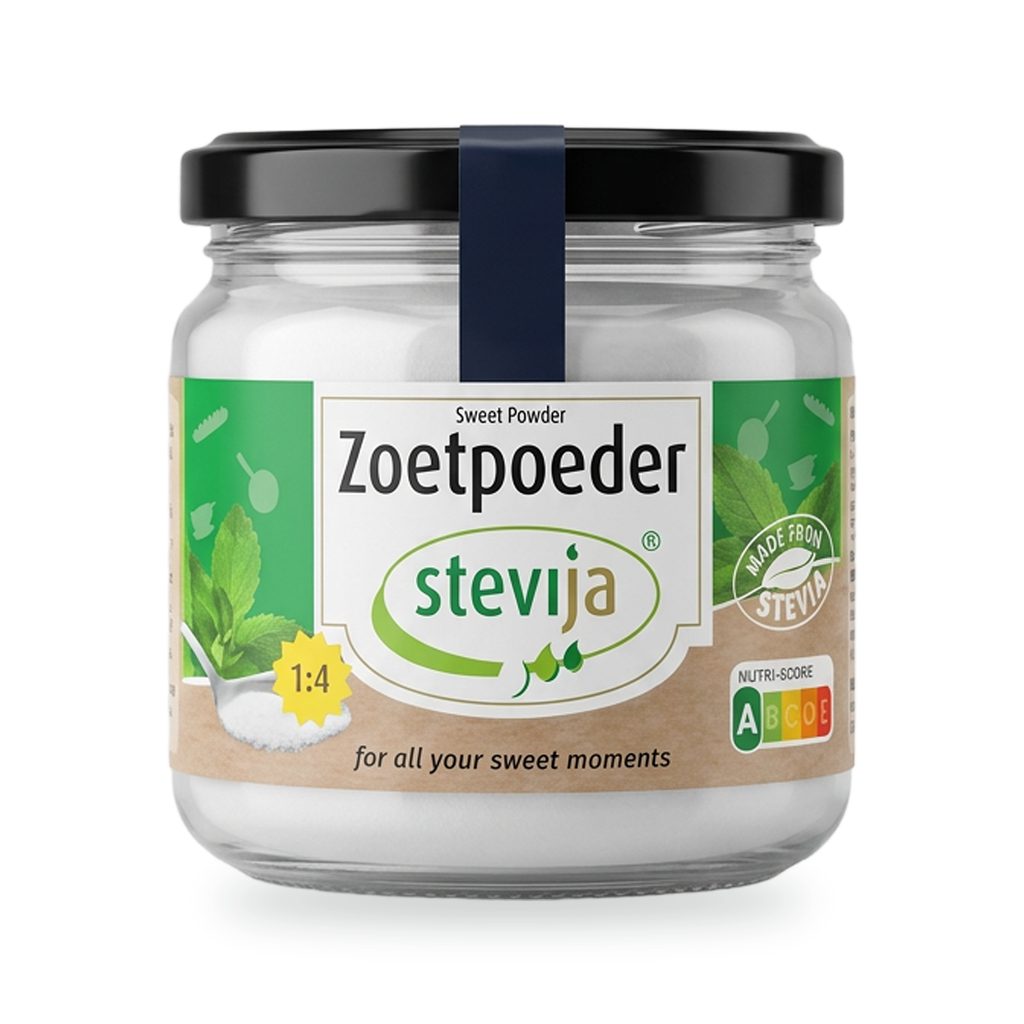
Dose 4:12 — 4 grams replaces about 12 grams of sugar.
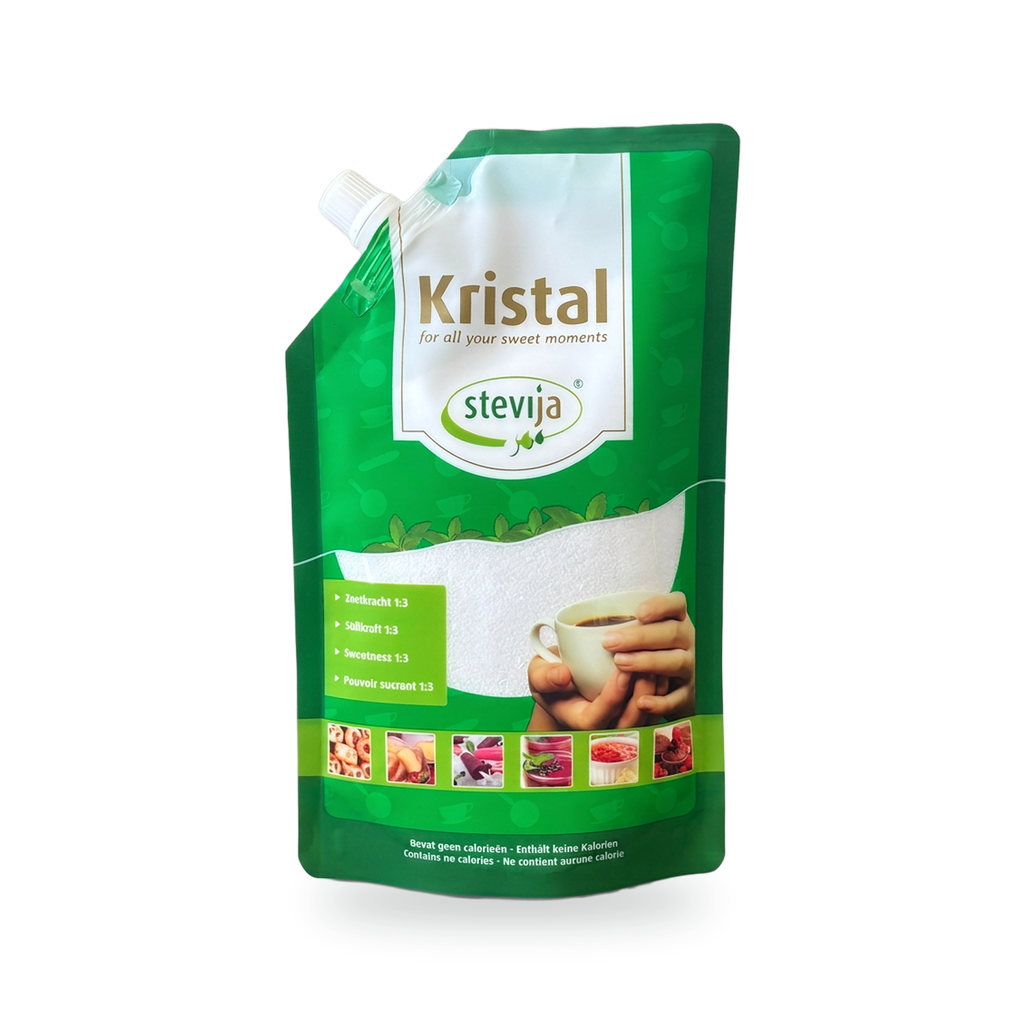
Dose 1:1 to 1:3 — suitable for baking.
Ready to try stevia?
Discover SteviJa Kristal, Zoetpoeder, Zoetjes and Liquid Natural in our shop.